Publications

10 peer-reviewed publications (incl. 6 as first author), >300 citations on Google Scholar, h-index = 7 (as of Aug 2026)

Journal Articles


10.MBD-ML: Many-Body Dispersion from Machine Learning for Molecules and Materials

Published in PRX Intelligence, 2026

Non-local many-body dispersion (MBD-NL) is one of the most accurate methods for describing long-range van der Waals interactions, yet its application has traditionally been limited to electronic-structure codes with native MBD-NL implementations, since it requires atomic polarizabilities and dispersion coefficients derived from the electron density. In the present work, we close this gap by introducing MBD-ML, a machine-learning model that predicts these quantities directly from atomic structure. As a result, MBD can be combined with virtually any atomistic method, including DFT, semi-empirical approaches, and machine-learning force fields, without requiring access to the underlying electron density.

Citation: E. Moerman, A. Kabylda, A. Khabibrakhmanov, A. Tkatchenko, MBD-ML: Many-Body Dispersion from Machine Learning for Molecules and Materials, PRX Intelligence 1, 013003 (2026).
9.Noncovalent Interactions in Density Functional Theory: All the Charge Density We Do Not See

Published in Journal of the American Chemical Society, 2025

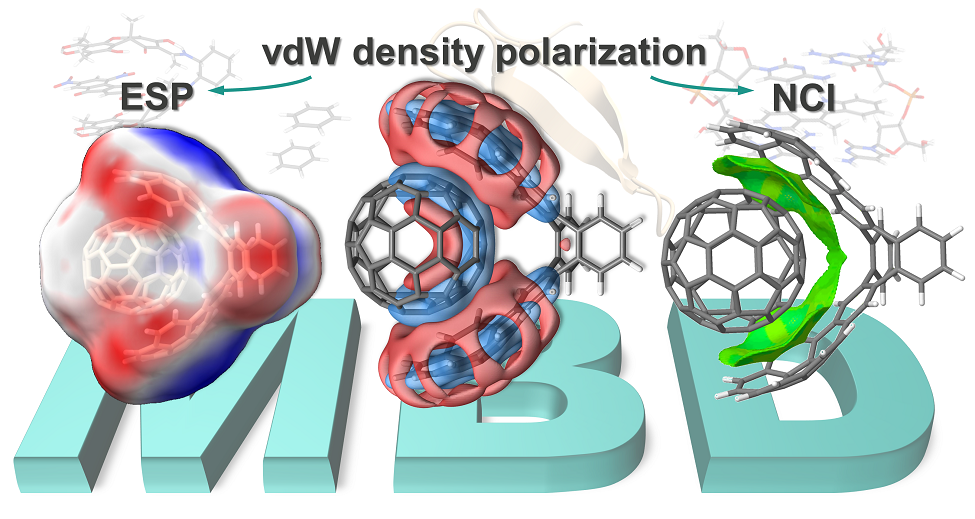
This is a systematic study of dispersion-induced density polarization ─ an effect that has been largely overlooked in density-functional theory. Through extensive benchmarking across more than 30 molecular and supramolecular systems, the work demonstrates that dispersion interactions can significantly polarize electronic densities and alter long-range electrostatic potentials by up to 4 kcal/mol. These findings reveal a non-trivial coupling between dispersion and electrostatic interactions, with important implications for both electronic-structure methods and molecular modeling. In addition, this study required the development of robust computational protocols for generating high-level reference data, including carefully converged CCSD─HF density differences. The data are published and fully available online (see “Datasets” below).

Citation: A. Khabibrakhmanov, M. Gori, C. Müller, A. Tkatchenko, Noncovalent Interactions in Density Functional Theory: All the Charge Density We Do Not See, J. Am. Chem. Soc. 147(44), 40763–40775 (2025).

8.Accurate Noncovalent Interactions in Atomistic Systems via Quantum Drude Oscillators

Published in The Journal of Chemical Physics, 2025

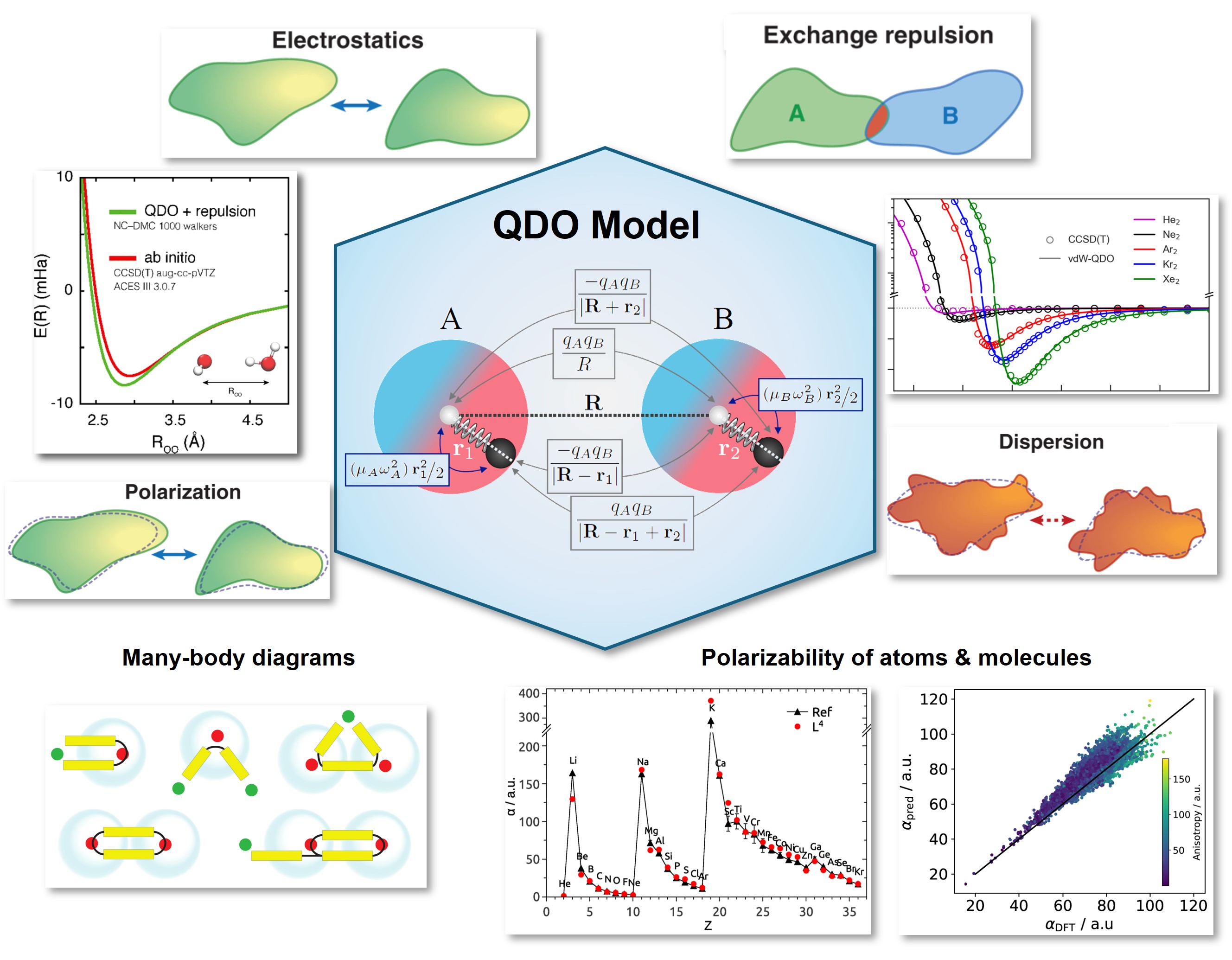
In this community-building review, we aimed to collect and synthesize the knowledge about modeling noncovalent interactions using quantum Drude oscillator (QDO) models that has emerged from intensive research efforts over the past decades. The review focuses on the theoretical underpinnings of the QDO model and explains the physical foundations for its soaring success in describing polarization response and vdW interactions across a broad range of atomistic systems. The theoretical frameworks considered range from perturbation theory and many-body dispersion approaches to quantum Monte Carlo and path-integral techniques. I led the writing process by contributing sections, coordinating co-authors and serving as the primary editor of the manuscript.

Citation: A. Khabibrakhmanov, D. V. Fedorov, A. Ambrosetti, J. Crain, K. L. C. Hunt, E. R. Johnson, K. D. Jordan, S. Góger, M. Gori, M. R. Karimpour, R. J. Maurer, M. Sadhukhan, M. Stöhr, A. Tkatchenko, Accurate Noncovalent Interactions in Atomistic Systems via Quantum Drude Oscillators, J. Chem. Phys. 163, 151001 (2025).

TOC figure for Accurate Noncovalent Interactions in Atomistic Systems via Quantum Drude Oscillators TOC figure for Accurate Noncovalent Interactions in Atomistic Systems via Quantum Drude Oscillators (enlarged)

7.Molecular Simulations with a Pretrained Neural Network and Universal Pairwise Force Fields

Published in Journal of the American Chemical Society, 2025

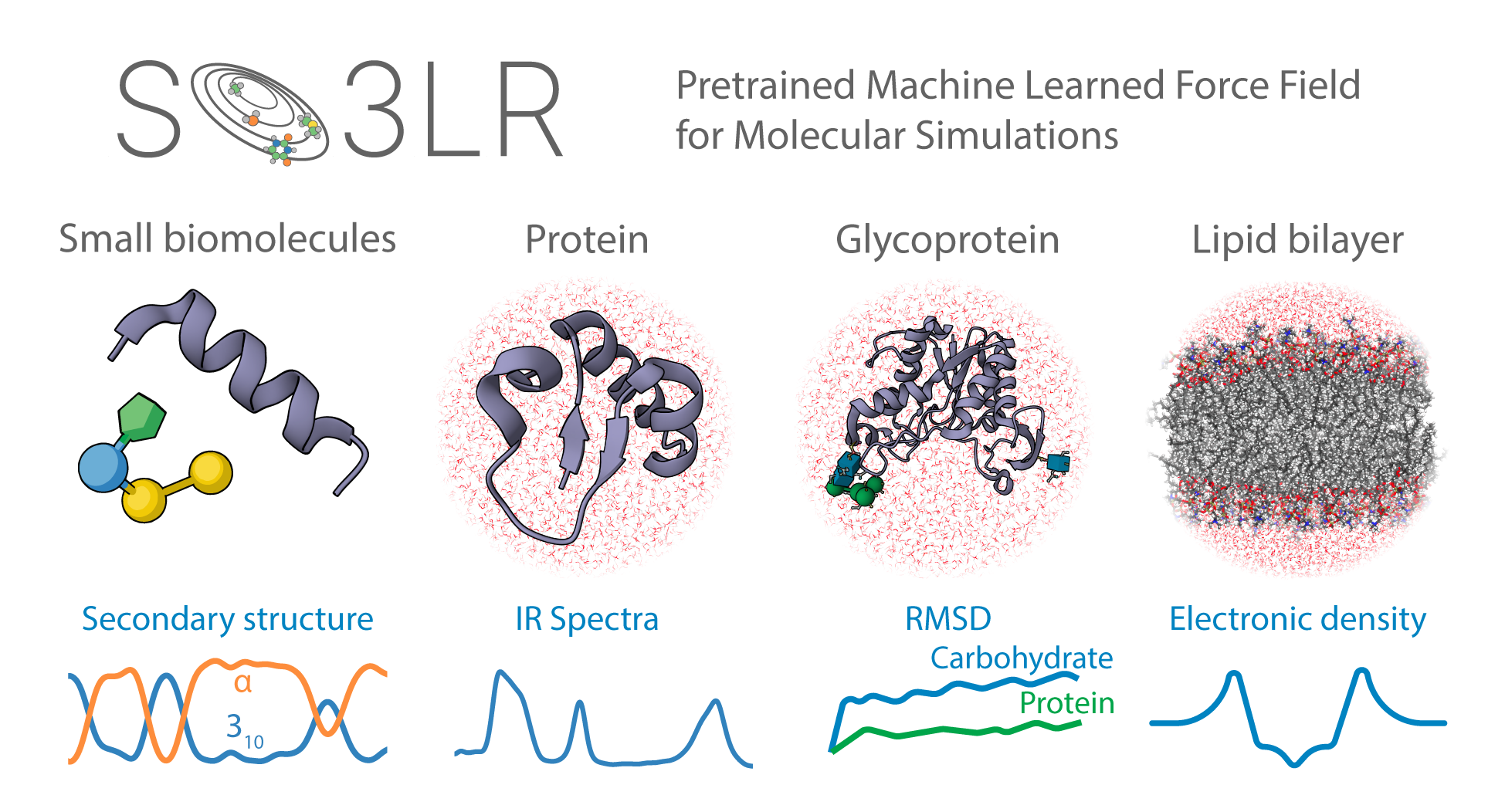
This work introduces the SO3LR method that integrates the fast and stable SO3krates neural network for semilocal interactions with universal pairwise force fields designed for short-range repulsion, long-range electrostatics, and dispersion interactions. My contribution was designing and implementing these long-range modules based on my prior work on the universal vdW-QDO potentials. SO3LR is trained on a diverse PBE0+MBD dataset of 4 million neutral and charged molecular complexes, ensuring broad coverage of covalent and noncovalent interactions. SO3LR is applied to study units of four major biomolecule types, polypeptide folding, and nanosecond dynamics of larger systems such as a protein, a glycoprotein, and a lipid bilayer, all in explicit solvent, demonstrating reasonable to high accuracy.

Citation: A. Kabylda, J. T. Frank, S. Suárez-Dou, A. Khabibrakhmanov, L. M. Sandonas, O. T. Unke, S. Chmiela, K.-R. Müller, A. Tkatchenko, Molecular Simulations with a Pretrained Neural Network and Universal Pairwise Force Fields, J. Am. Chem. Soc. 147(37), 33723–33734 (2025).

6.Universal Pairwise Interatomic van der Waals Potentials Based on Quantum Drude Oscillators

Published in Journal of Chemical Theory and Computation, 2023

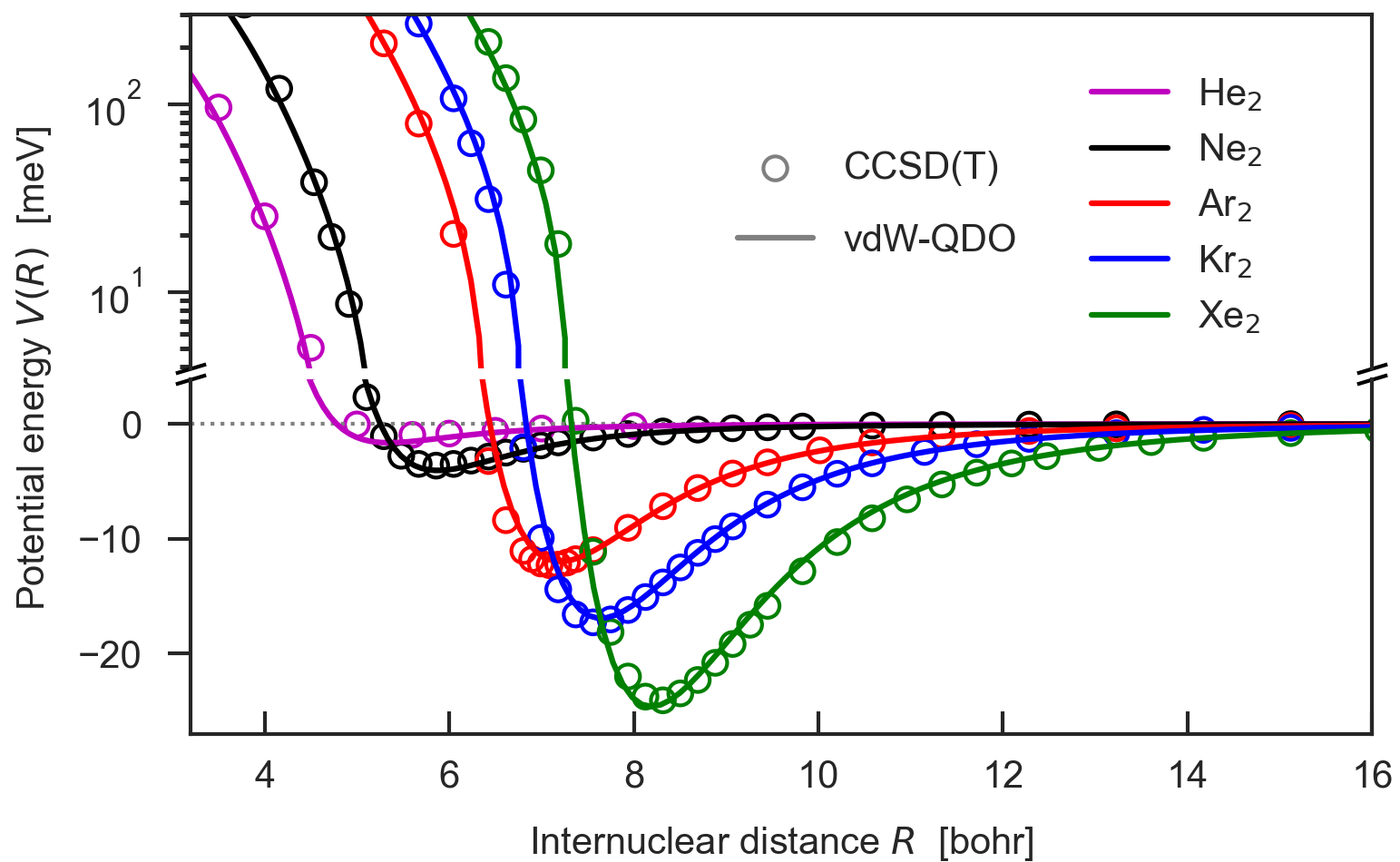
In this paper, I developed a universal analytical vdW potential based on the QDO framework, providing a transferable description of noncovalent interactions across the periodic table. The proposed vdW–QDO potential requires only two free-atom properties ─ the static dipole polarizability \(\alpha_1\) and the dipole–dipole \(C_6\) dispersion coefficient. This is achieved by deriving the functional form of the potential from the QDO model, employing scaling laws for the equilibrium distance and the binding energy, and applying the microscopic law of corresponding states. The vdW–QDO potential is shown to be accurate for vdW binding energy curves of noble-gas and group-II dimers, and it is generalized to molecular systems as well. This potential has since been adopted as the long-range module in ML force-field frameworks, including SO3LR and FeNNol, demonstrating both its physical soundness and practical utility.

Citation: A. Khabibrakhmanov, D. V. Fedorov, A. Tkatchenko, Universal Pairwise Interatomic van der Waals Potentials Based on Quantum Drude Oscillators, J. Chem. Theory Comput. 19, 7895–7907 (2023).

5.Optimized Quantum Drude Oscillators for Atomic and Molecular Response Properties

Published in The Journal of Physical Chemistry Letters, 2023

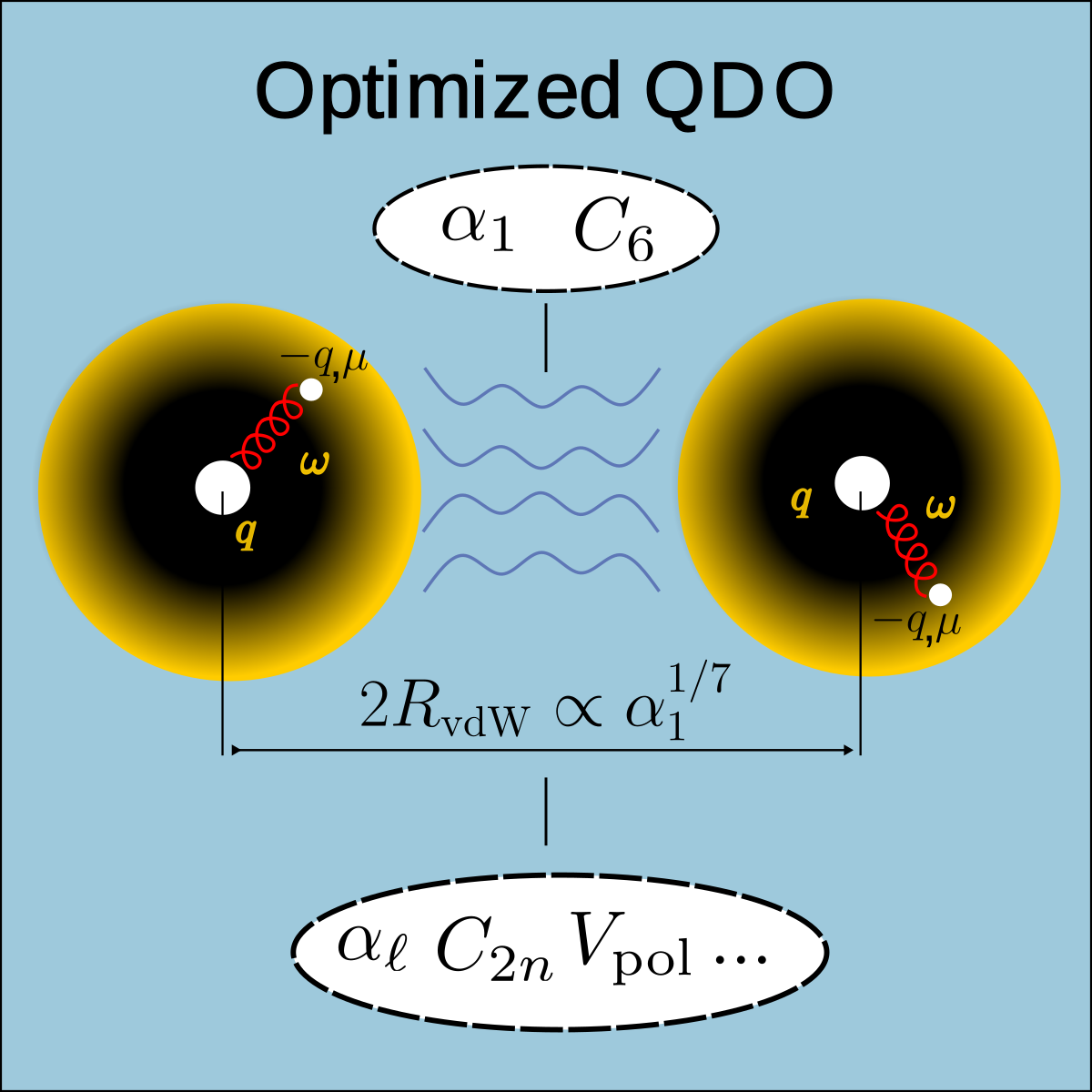
Here, we present an optimized parametrization of the QDO model (OQDO), where three parameters of the model (frequency, mass, and charge) are determined by using only dipolar atomic response properties ─ the static polarizability \(\alpha_1\) and the \(C_6\) dispersion coefficient. This is achieved by enforcing the \(R_{\rm vdW} \propto \alpha_1^{1/7}\) scaling law for vdW radii of vdW-bound atomic dimers. The resulting OQDO model accurately reproduces atomic spatial polarization potentials and multipolar dispersion coefficients, providing a balanced and robust parametrization for response properties across the periodic table. My contribution was calculating the QDO polarization potentials and dispersion coefficients, as well as making plots and writing the manuscript.

Citation: S. Góger*, A. Khabibrakhmanov*, O. Vaccarelli*, D. V. Fedorov, A. Tkatchenko, Optimized Quantum Drude Oscillators for Atomic and Molecular Response Properties, J. Phys. Chem. Lett. 14, 6217–6223 (2023).
* marks equal contributions.

4.Electronic Properties of Graphene Oxide: Nanoroads Towards Novel Applications

Published in Nanoscale, 2022

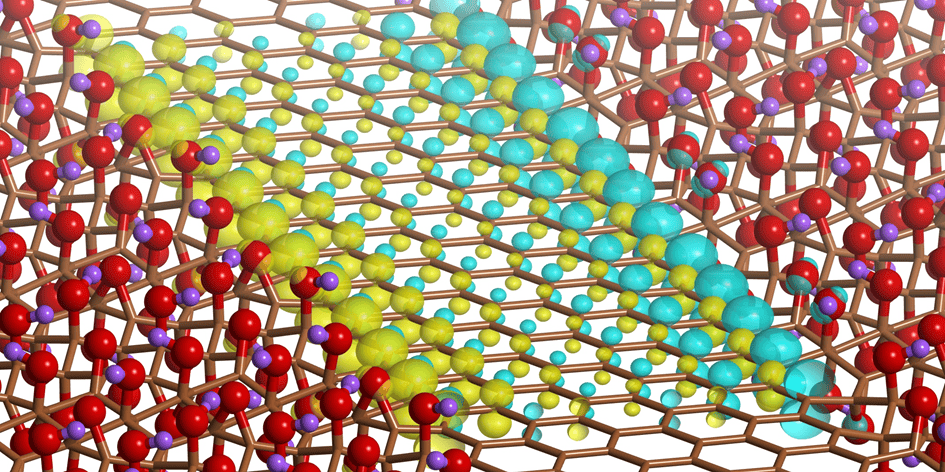
In this paper, I performed density-functional modeling of graphene oxide (GO) patterned by pristine graphene nanoroads. First, I examined various structural and compositional GO models, formed by the adsorption of epoxy and hydroxyl groups, and ranked them by thermodynamic stability. Next, I explored the influence of the nanoroad width and orientation on the electronic properties for three GO compositions. For armchair nanoroads, I found that the band gap exhibits an oscillatory decrease with increasing width, similar to fluorinated graphene. In the case of zigzag nanoroads, emergent antiferromagnetism was observed and a controlled electric-field-induced transition to a half-metallic state was demonstrated, suggesting possible applications of patterned GO in optoelectronics and spintronics.

Citation: A. I. Khabibrakhmanov, P. B. Sorokin, Electronic Properties of Graphene Oxide: Nanoroads Towards Novel Applications, Nanoscale 14, 4131–4144 (2022).

3.Extended UV Detection Bandwidth: h-BN/Al Powder Nanocomposites Photodetectors Sensitive in a Middle UV Region due to Localized Surface Plasmon Resonance Effect

Published in EPL, 2021

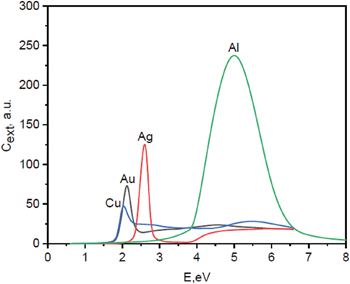
In this study, I provided theoretical support to our experimental collaborators at NUST “MISiS”, who were working on extending the UV detection bandwidth of h-BN photodetectors by mixing the material with metal nanoparticles. My contribution was computing surface plasmon resonance spectra for h-BN nanocomposites with various metals (Cu, Ag, Au, and Al). Based on my predictions, Al was chosen as the most suitable candidate, and experiments confirmed the results, revealing a cutoff wavelength of 266 nm ─ beyond the 240 nm detection limit of pure h-BN.

Citation: I. N. Volkov, Z. S. Yermekova, A. I. Khabibrakhmanov, A. M. Kovalskii, S. Corthey, A. R. Tameev, A. E. Aleksandrov, P. B. Sorokin, D. V. Shtansky, A. T. Matveev, Extended UV Detection Bandwidth: h-BN/Al Powder Nanocomposites Photodetectors Sensitive in a Middle UV Region due to Localized Surface Plasmon Resonance Effect, EPL 133, 28002 (2021).

TOC figure for Extended UV Detection Bandwidth: h-BN/Al Powder Nanocomposites Photodetectors Sensitive in a Middle UV Region due to Localized Surface Plasmon Resonance Effect TOC figure for Extended UV Detection Bandwidth: h-BN/Al Powder Nanocomposites Photodetectors Sensitive in a Middle UV Region due to Localized Surface Plasmon Resonance Effect (enlarged)

2.Carbon at the Nanoscale: Ultrastiffness and Unambiguous Definition of Incompressibility

Published in Carbon, 2020

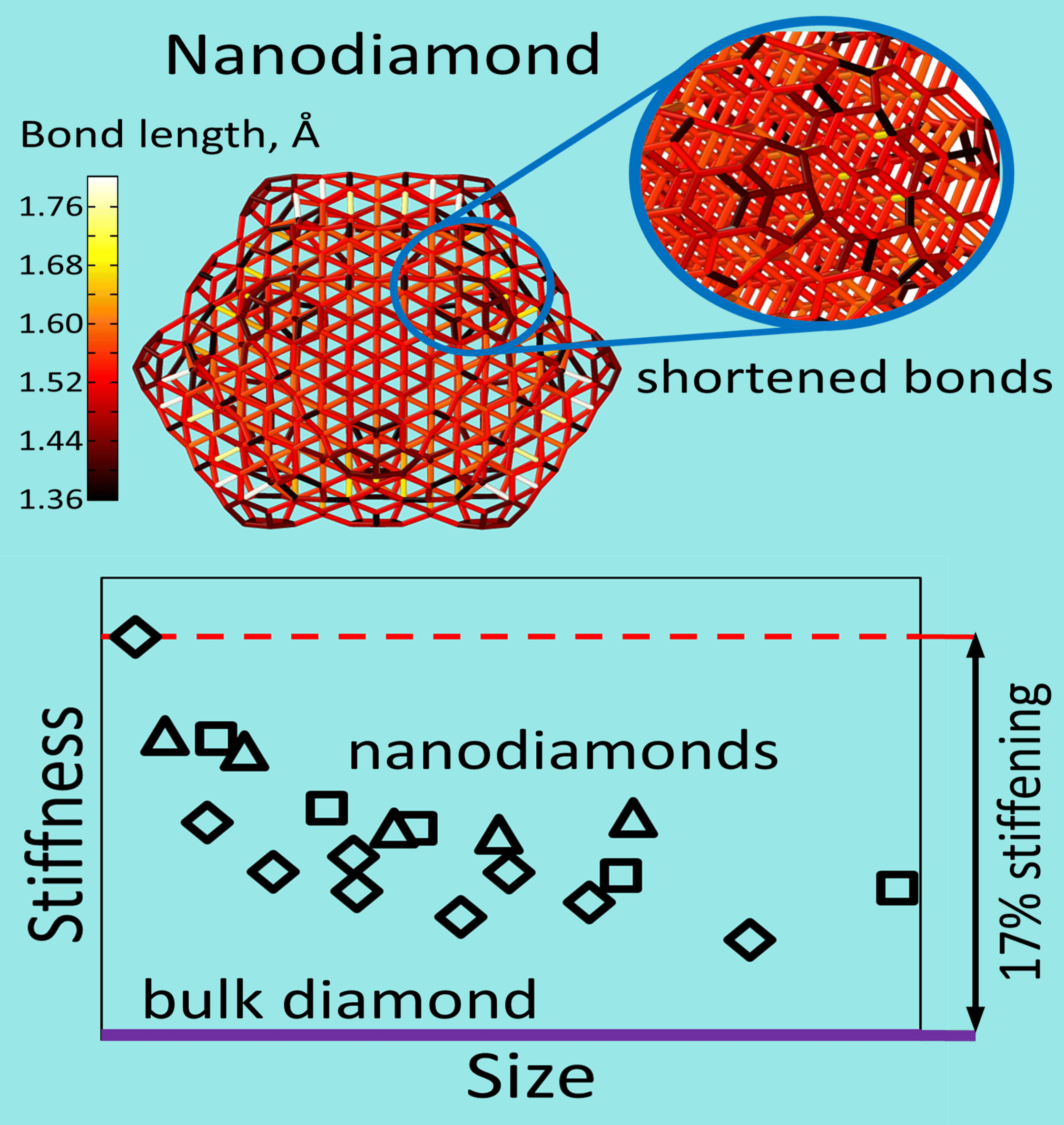
Building upon my previous work, I studied the mechanical stiffness of nanodiamonds in detail via density-functional simulations. The main outcome is that nanodiamonds can exhibit stiffness superior to bulk diamond depending on their shape and size ─ with their bulk modulus reaching 670 GPa, as compared to 443 GPa for bulk diamond. However, the bulk modulus depends on volume, which is an ill-defined quantity at the nanoscale. To avoid that, we formulated an unambiguous way to characterize the incompressibility of finite nano-objects via their average bond stiffness. By calibrating on bulk diamond and graphene, we set the average bond stiffness scale and used it to confirm the stiffening of non-hydrogenated nanodiamonds by up to 17% relative to crystalline diamond.

Citation: A. Khabibrakhmanov, P. Sorokin, Carbon at the Nanoscale: Ultrastiffness and Unambiguous Definition of Incompressibility, Carbon 160, 228–235 (2020).

1.Ultrasmall Diamond Nanoparticles with Unusual Incompressibility

Published in Diamond and Related Materials, 2019

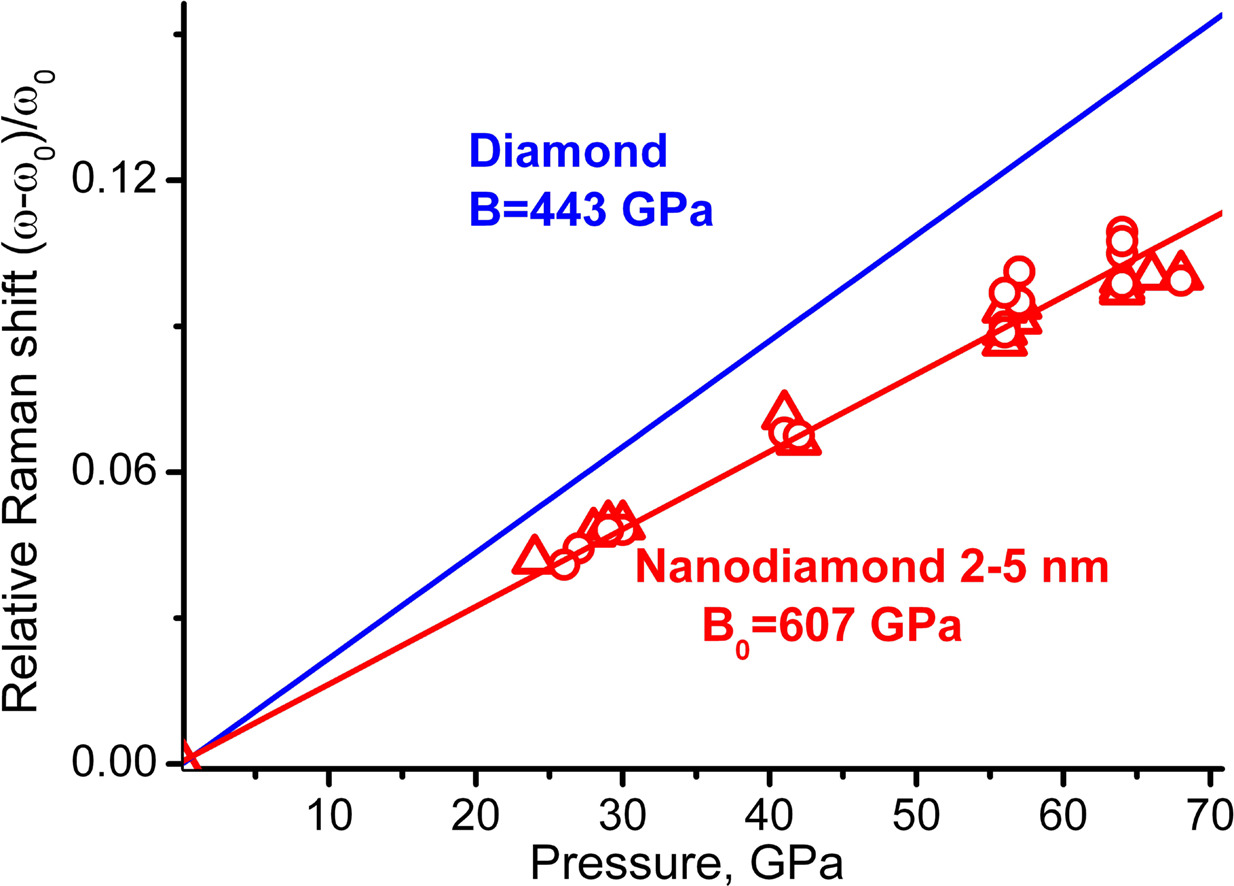
In this work, I provided theoretical support to our experimental colleagues for their studies of nanodiamond stiffness. This was my first scientific project: I created structural models of nanodiamonds in a given size range and computed their bulk modulus using classical interatomic potentials. The predicted trend of stiffness enhancement due to quantum confinement effects was confirmed by experimental (Raman spectroscopy) measurements, revealing a nanodiamond bulk modulus of 607 GPa. This project laid the foundation for my subsequent theoretical research on nanodiamond stiffness.

Citation: M. Popov, V. Churkin, D. Ovsyannikov, A. Khabibrakhmanov, A. Kirichenko, E. Skryleva, Y. Parkhomenko, M. Kuznetsov, S. Nosukhin, P. Sorokin, S. Terentiev, V. Blank, Ultrasmall Diamond Nanoparticles with Unusual Incompressibility, Diam. Relat. Mater. 96, 52–57 (2019).

TOC figure for Ultrasmall Diamond Nanoparticles with Unusual Incompressibility TOC figure for Ultrasmall Diamond Nanoparticles with Unusual Incompressibility (enlarged)

Datasets


1.Data for ‘‘Noncovalent Interactions in Density Functional Theory: All the Charge Density We Do Not See’’

Published in Zenodo, 2026

The dataset includes all the volumetric data ─ electron density difference maps, electrostatic potentials, noncovalent interaction analysis data ─ used to generate the results in the paper. In addition, the numerical data used for plotting the figures, as well as example Python scripts and geometries, are included. For convenience and compactness, the data are provided as several compressed .tar.gz archives.

Citation: A. Khabibrakhmanov, Data for "Noncovalent Interactions in Density Functional Theory: All the Charge Density We Do Not See", Zenodo (2026).

TOC figure for Data for ''Noncovalent Interactions in Density Functional Theory: All the Charge Density We Do Not See'' TOC figure for Data for ''Noncovalent Interactions in Density Functional Theory: All the Charge Density We Do Not See'' (enlarged)